
Choosing mobility components for industrial equipment requires you to understand the differences between wheels vs. casters. The two often appear interchangeable, but their structure and function give them very different roles. Choosing correctly between casters vs. wheels can improve load capacity, protect floors, and increase efficiency across material-handling environments.
Both wheels and casters support movement, but the right product depends on how your equipment must perform. This caster wheel guide breaks down how each component works, when to use them, and how to match them to the demands of your operation.
What Is a Wheel?
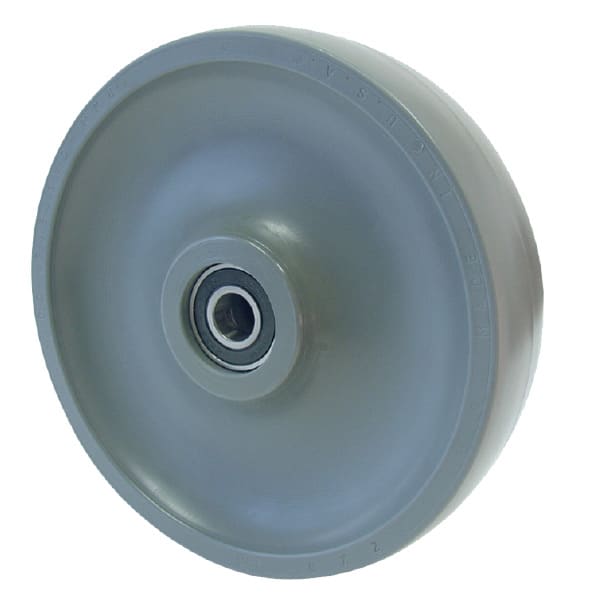
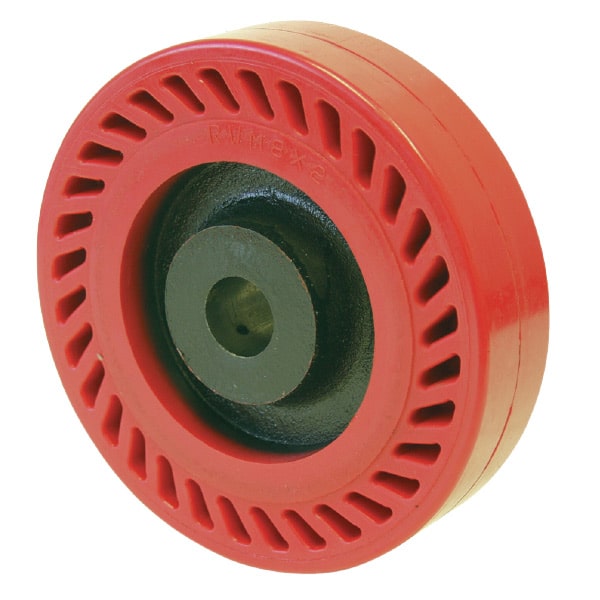
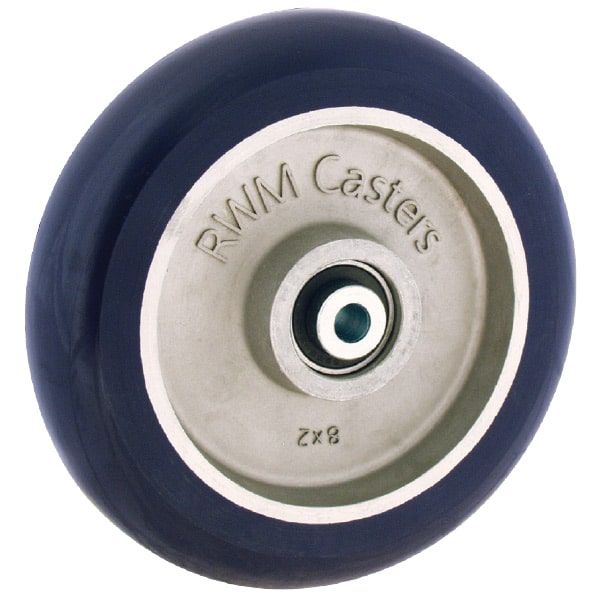
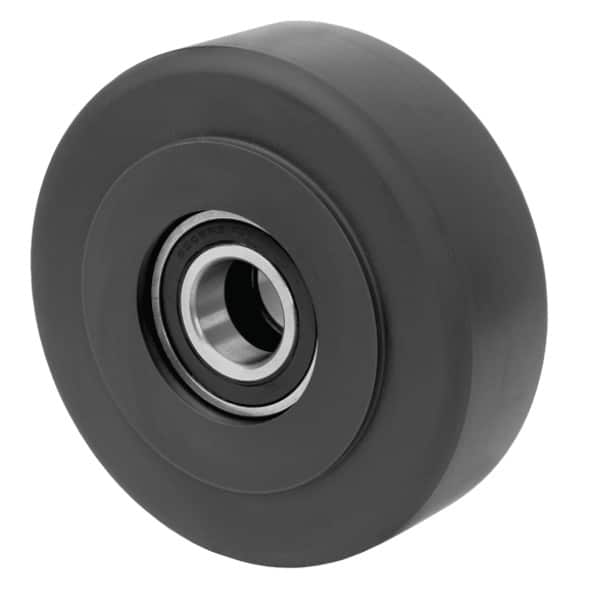
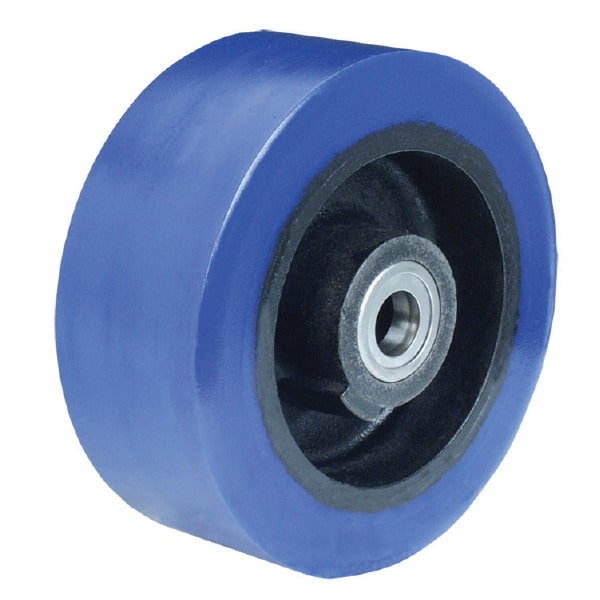
A wheel is a single rolling component that mounts directly to equipment or installs as part of a caster assembly. It rotates along one axis and cannot swivel. Because of this, a wheel supports straight-line travel without directional change. However, you can change direction by steering or manually repositioning the equipment.
Wheels appear on warehouse carts, material-handling racks, toolboxes, and rolling production platforms. They support movement across smooth surfaces and help reduce strain when operators move heavy loads by hand or using tow equipment. Common wheel materials include polyurethane, rubber, nylon, iron, and forged steel. Each option offers you a different balance of floor protection, weight capacity, and durability.
What Is a Caster?
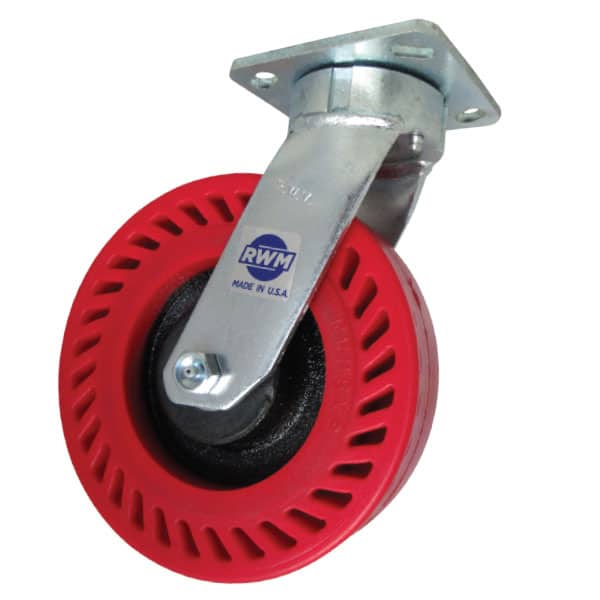
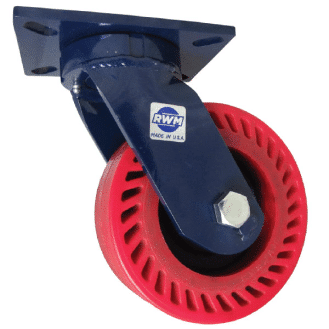
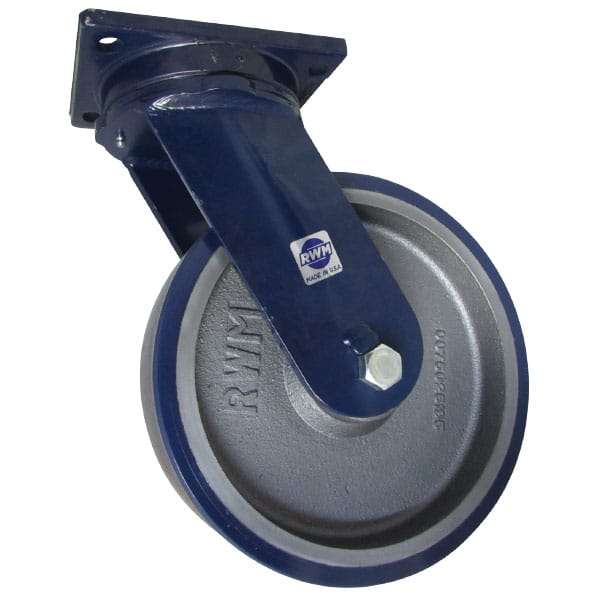
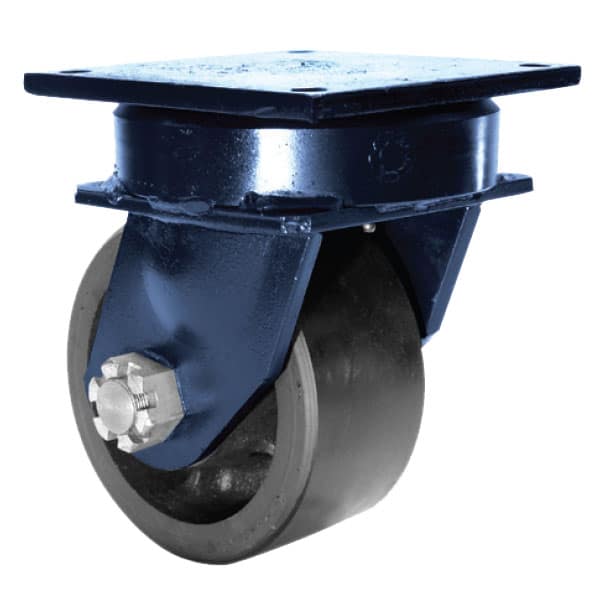
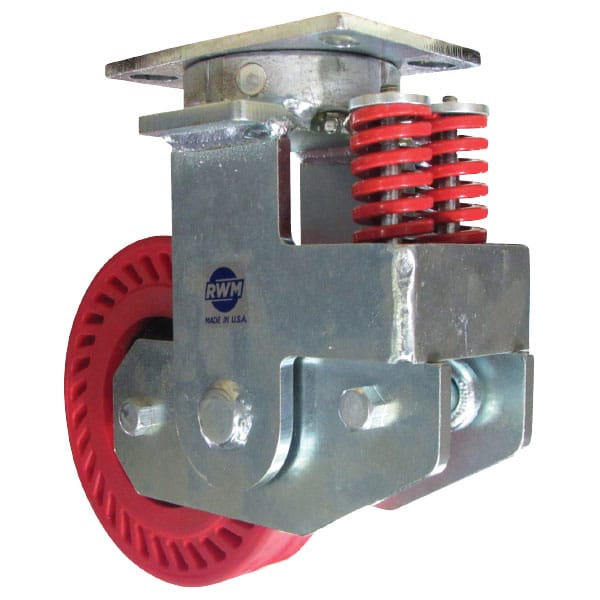
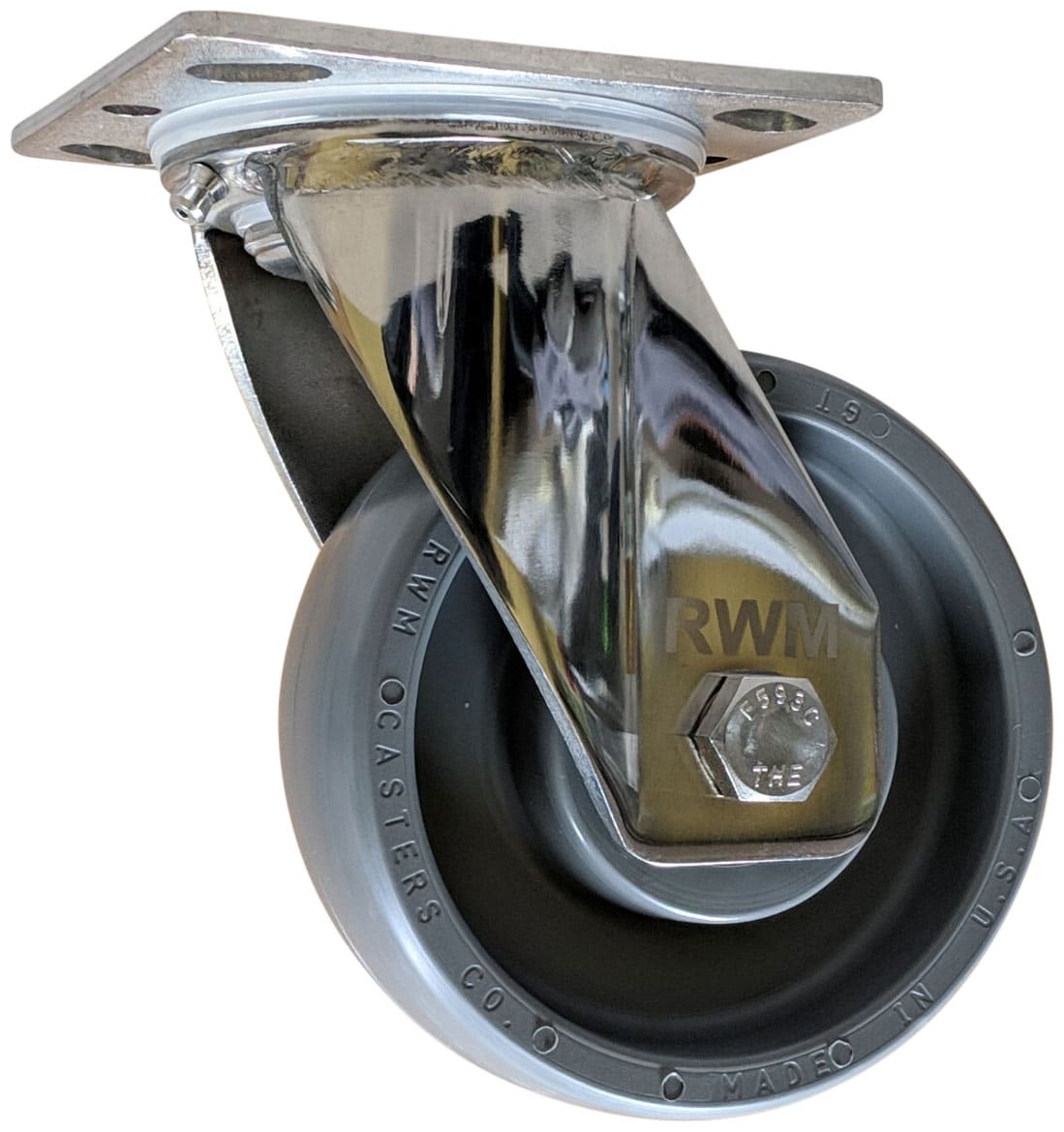
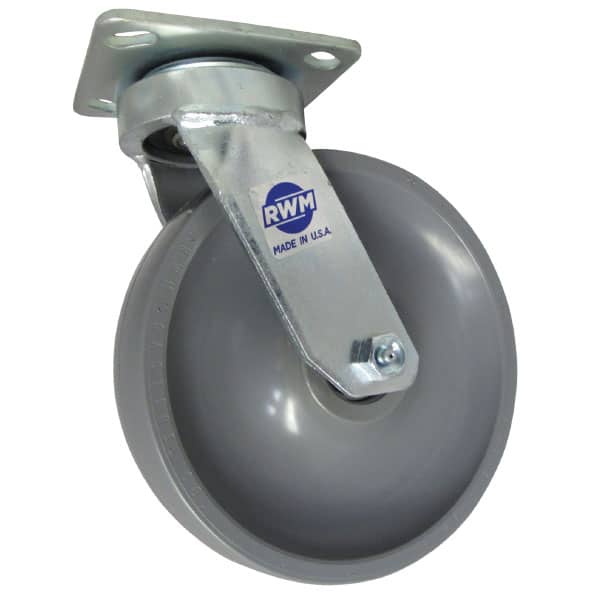
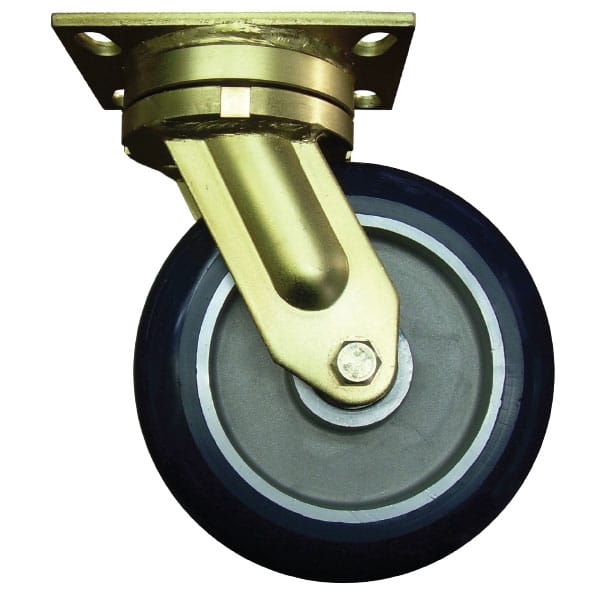
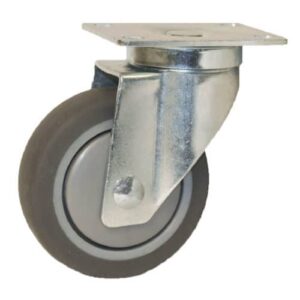
What are casters? A caster is a complete assembly that includes one or more wheels mounted inside a frame. The frame connects to the equipment and can allow the wheels to swivel. This design makes it possible to change direction without lifting or changing the position of the equipment.
Swivel casters rotate 360 degrees for tight maneuvering in narrow aisles or crowded production spaces. Rigid casters remain fixed and keep loads moving in a straight path. Many industrial carts use a combination of both for controlled movement and flexibility.
Caster assemblies vary widely. These variations include the weight capacity, mounting style, and overall size of the assembly. Heavy-duty casters can handle loads of several tons in steel mills and manufacturing plants. Aerospace production environments also utilize casters. Light- and medium-duty models excel in warehouses, retail settings, and foodservice operations.
Key Differences Between Wheels and Casters
The main difference is that wheels are a single rolling component while casters include both the wheel and the mounting system. A wheel moves only in one direction. A caster can change direction if it includes a swivel section.
Wheels are often installed directly on axles or inside caster frames. Casters provide the structure required for mounting, turning, and protecting the wheel while under load. In many situations, the question is not wheels or casters, but which wheel inside which caster type gives you the best performance.
When to Use Wheels vs. Casters
Wheels work best when the equipment already has a controlled path or guided movement. Conveyor carts and fork-pulled platforms often rely on fixed wheels that track straight lines across smooth concrete.
Casters make more sense when workers must move equipment by hand, reverse direction frequently, or work in confined spaces. Swivel casters provide flexibility for maneuvering around obstacles or turning corners without slowing production.
Contact Us Today