In the demanding world of material handling, the difference between a productive shift and a costly workplace injury often comes down to a few pounds of force. As industrial environments strive for greater efficiency, the physical strain on operators has become a focal point for safety managers and engineers alike. At RWM Casters, we address this challenge through rigorous scientific analysis, primarily centered on The Essential Push/Pull Test.
Understanding the mechanics of how a cart moves—and the force required to get it started—is critical for selecting the right industrial casters. This guide explores the intricacies of push/pull testing, why ergonomics matter, and how our automated testing processes ensure your facility remains safe and efficient.
Why Ergonomics in Material Handling is Non-Negotiable
“Ergonomics” has evolved from a workplace buzzword into a vital component of operational success. Every year, North American industries lose billions of dollars due to employee downtime, medical expenses, and workers’ compensation claims stemming from overexertion and musculoskeletal disorders (MSDs).
Manual material handling is one of the leading causes of these injuries. When an operator struggles to move a heavy cart, they aren’t just slowing down the supply chain; they are risking long-term physical damage. By prioritizing **ergonomic casters** and conducting thorough push/pull tests, companies protect their most valuable asset—their people—while simultaneously safeguarding their bottom line.
What is the Push/Pull Test?
The Push/Pull Test is a standardized procedure used to determine the exact amount of force required to initiate and maintain the movement of a loaded cart. Unlike simple load capacity ratings, which tell you how much weight a caster can support without breaking, push/pull data tells you how that weight feels to a human operator.
At RWM, we utilize a specialized Automated Push/Pull Test Machine. This advanced piece of equipment allows our Engineering and Quality Assurance teams to move beyond guesswork and provide data-driven recommendations for caster and wheel combinations.
The Mechanics of the Test
The RWM test setup involves several key components:
- The Test Cart: A 500-pound mild steel cart measuring approximately 4 x 5 feet.
- Guide Rails: These ensure the cart maintains a straight path, preventing “wandering” that could skew force readings.
- S-Type Load Cell: This precision instrument acts as the coupling between the cart and the drive motor. It measures resistance in pounds, providing a digital readout of the force applied.
- Variable Speed Motor: A chain-driven system that simulates consistent human pushing and pulling speeds across different directions.
Key Metrics: Breakaway Force vs. Rolling Resistance
When analyzing push/pull data, two specific metrics are most important:
1. Breakaway Force (Initial Force)
This is the amount of energy required to get a stationary cart into motion. It is almost always higher than the force needed to keep the cart moving. Breakaway force is heavily influenced by the caster’s swivel orientation. If the wheels are turned 90 degrees to the direction of travel, the operator must exert significant force to “snap” the casters into alignment.
2. Rolling Resistance (Sustained Force)
Once the cart is in motion, rolling resistance is the force required to keep it moving at a constant speed. Factors affecting this include the wheel material, floor conditions, and the quality of the bearings. Reducing rolling resistance is key to preventing fatigue during long shifts.
The Pro-Tip: Industry standards generally suggest that for carts under 2,000 lbs, the breakaway force should be kept under 50 lbs to ensure operator safety and comfort.
The RWM Testing Process: A Deeper Look
We don’t just run the cart once and call it a day. To provide accurate, real-world data, our testing protocol is exhaustive:
1. Seven Test Runs: For every specific condition, we perform seven runs. To ensure statistical accuracy, we drop the highest and lowest values and average the remaining five. 2. Multiple Orientations: We test three distinct caster configurations:- Zero Degree Orientation: All casters are aligned straight.
- 90 Degree Same Direction: Casters are perpendicular to the path.
- 90 Degree Opposing Directions: The most difficult scenario, simulating “worst-case” real-world conditions.
Factors That Influence Push/Pull Results
Selecting the “perfect” caster requires balancing several variables revealed during testing:
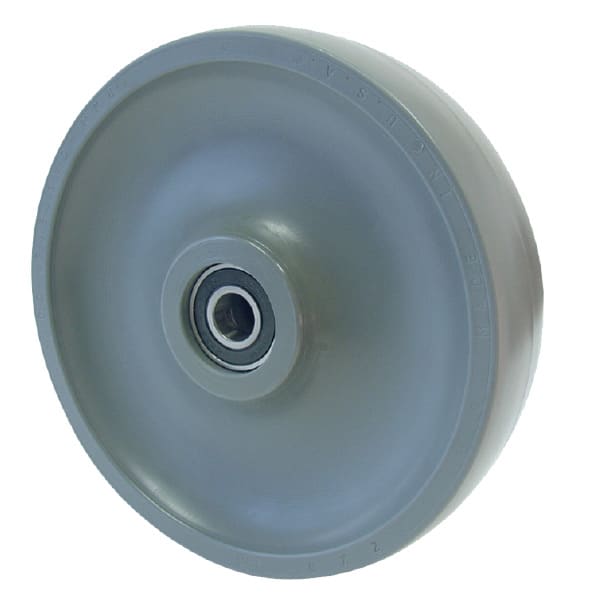
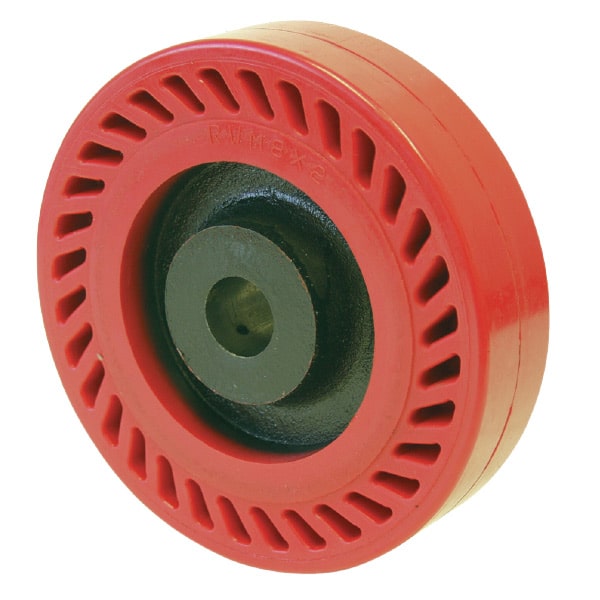
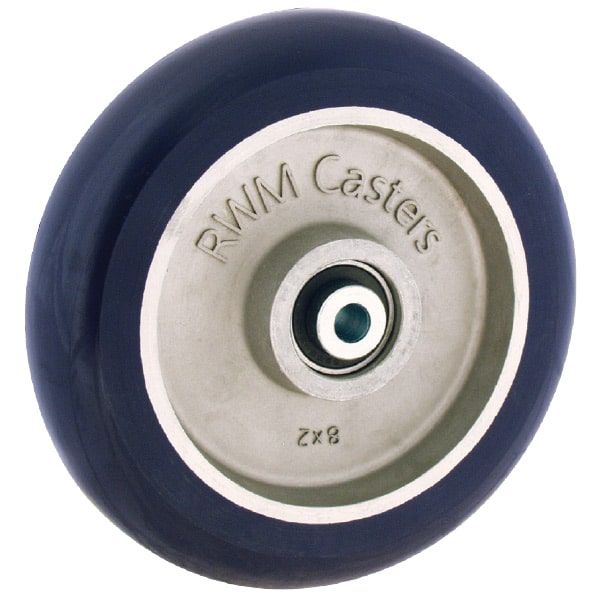
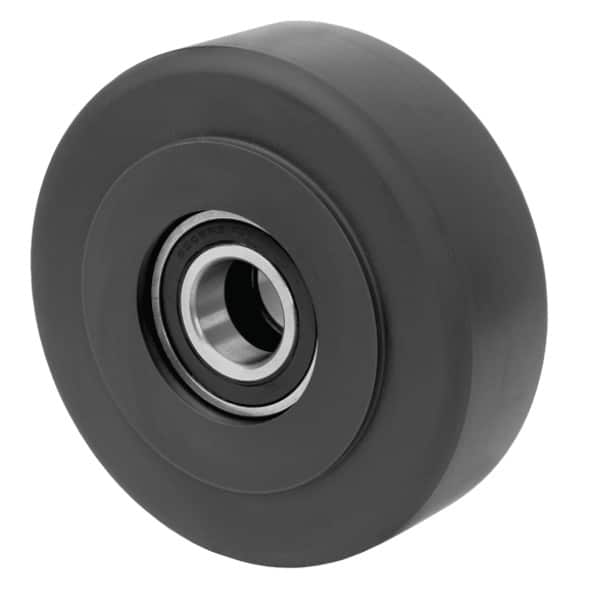
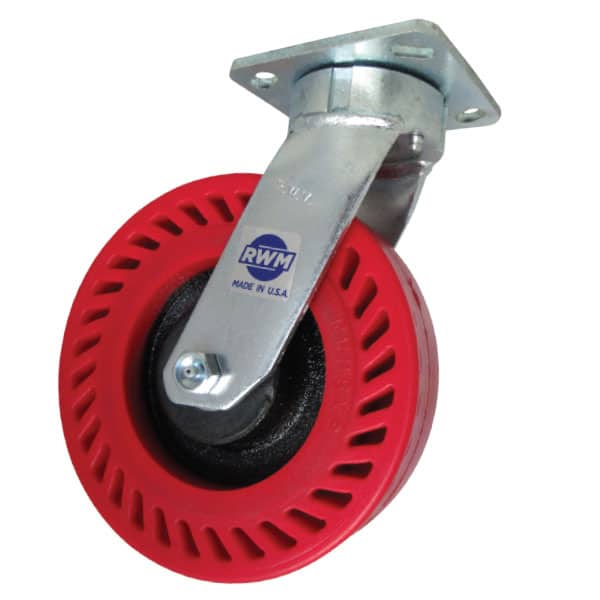
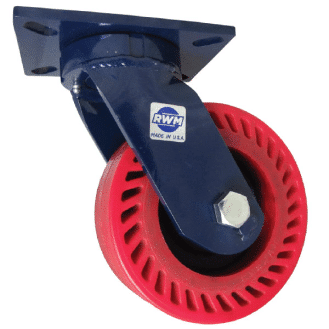
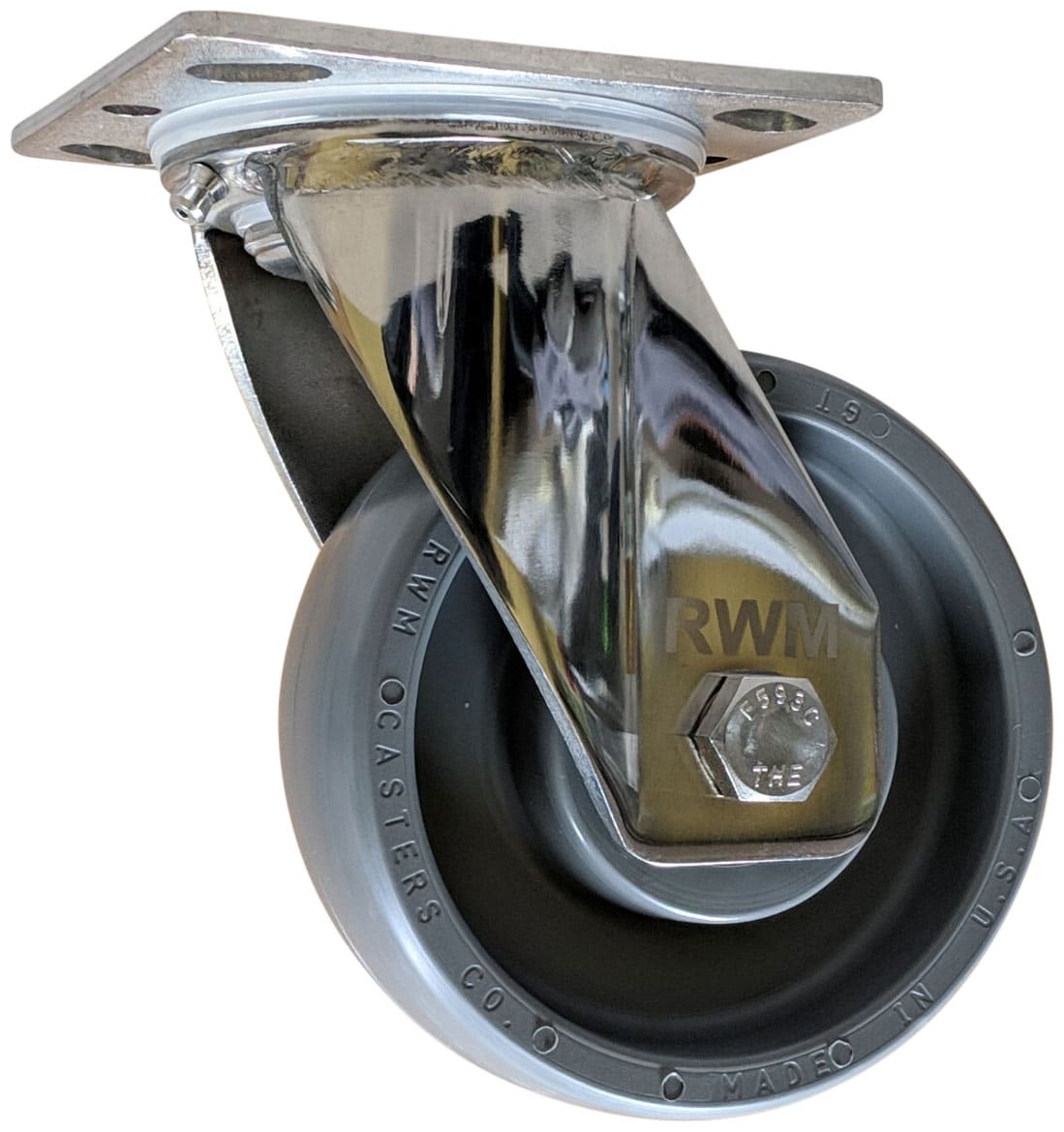
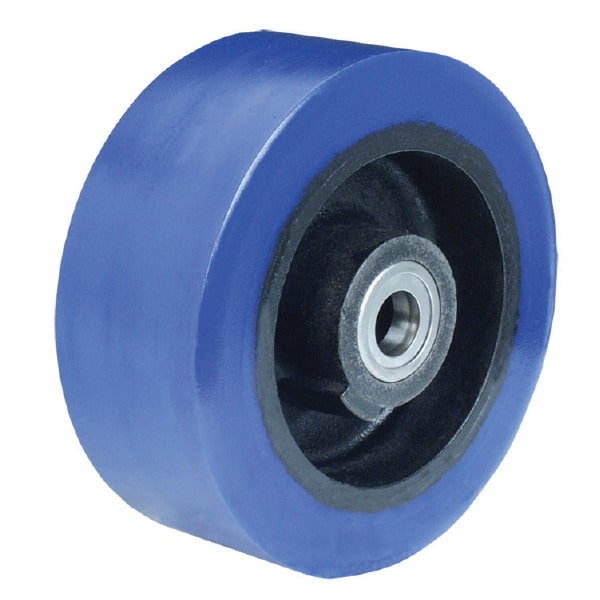
- Wheel Material: Soft elastomers like our Ergo GT or Torus wheels offer excellent debris rejection and floor protection while maintaining low rolling resistance. Harder materials may roll easier on clean floors but can be difficult to move over obstacles.
- Swivel Lead: A longer swivel lead can reduce the force needed to initiate a turn, making the cart feel more “nimble.”
- Bearing Quality: High-efficiency ball bearings or tapered roller bearings significantly reduce internal friction.
- Floor Conditions: The floor surface (concrete, coated, or tiled) acts as the “other half” of the wheel. We often coat our test floors to simulate common industrial environments.
Featured Ergonomic Solutions
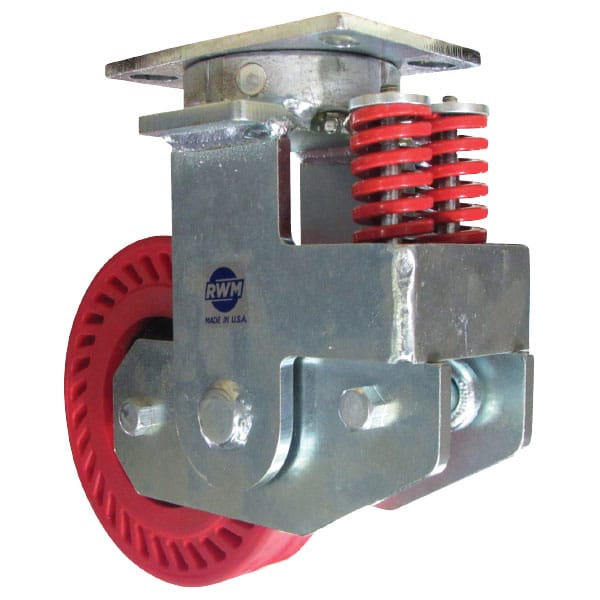
Based on thousands of hours of push/pull testing, RWM has developed a suite of products designed specifically to lower manual force requirements:
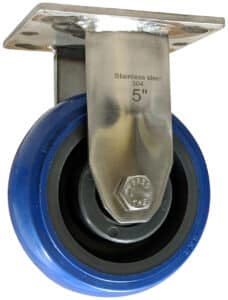
- Freedom® Series Casters: These maintenance-free casters feature a unique raceway design that eliminates the need for greasing while providing ultra-smooth swivel action.
- Ergo GT Elastomer Wheels: Engineered to reduce breakaway force, these wheels “rebound” energy to help get the cart moving.
- Torus Wheels: Known for their rounded tread profile, they minimize the footprint on the floor, which drastically reduces friction during turns.
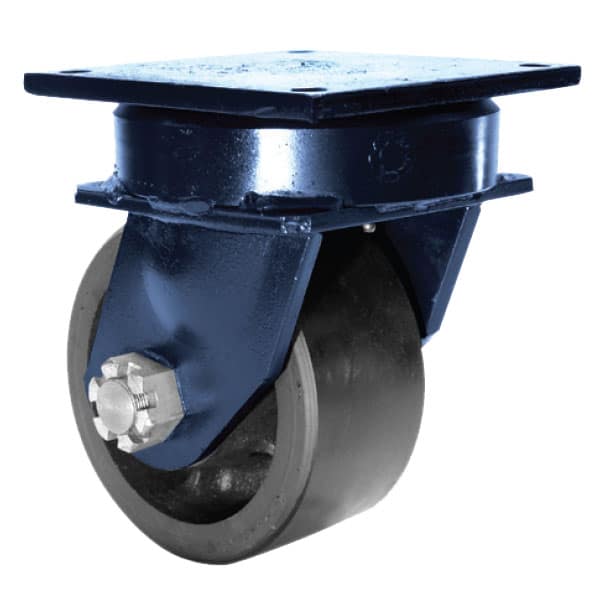
- Kingpinless™ Casters: Our patented design removes the “kingpin”—the most common point of failure—allowing for smoother swiveling and higher durability under heavy loads.
The Value of Data-Driven Selection
Why does RWM invest so much in the Essential Push/Pull Test? Because it allows us to partner with our customers. If your facility is seeing an uptick in back strain reports, or if your towline system is drawing too much power, we can take your specific cart dimensions and loads and run them through our simulator.
By choosing a caster that has been verified through push/pull testing, you achieve:
- Reduced Injury Risk: Lowering force below the 50-lb threshold keeps your team safe.
- Increased Productivity: Operators move faster and with less fatigue when equipment works with them, not against them.
- Lower Total Cost of Ownership: The right caster lasts longer and prevents damage to both floors and carts.
Conclusion: Let Science Lead the Way
The ergonomics of material handling shouldn’t be a guessing game. The Essential Push/Pull Test provides the empirical evidence needed to optimize your facility’s performance. Whether you are moving medical supplies in a hospital or heavy automotive parts on an assembly line, the right caster makes all the difference.
Are you interested in seeing how your current setup compares? Contact the experts at RWM Casters. Our engineering team is ready to help you find the perfect wheel and caster combination to keep your operation rolling smoothly and safely.
Interested in how the RWM Automated Push/Pull Test Machine can help you find the perfect caster and wheel for your applications? Read More or contact our sales or customer service departments at customerservice@rwmcasters.com or 1-800-634-7704 for immediate attention to your application.
Contact Us Today